Framework
Trust Is Built Through Visibility
The conditions that help people do their best work.
9 minute read
Trust
Leadership
Systems
Operations
Design
One of the things I've been noticing lately is that many workplace frustrations aren't actually people problems.
They're visibility problems.
At first, that sounds overly simplistic. After all, every organization has different personalities, competing priorities, limited budgets, and shifting expectations. Surely the challenge is more complicated than simply "seeing the work."
But after watching projects unfold from the intersection of operations, technology, and people, I've started asking a different question:
What allows people to trust one another operationally?
Not trust in the sense of character.
Operational trust.
The kind of trust that allows teams to move quickly without constantly checking on one another.
The kind of trust that lets people focus on solving problems instead of wondering what's happening behind the scenes.
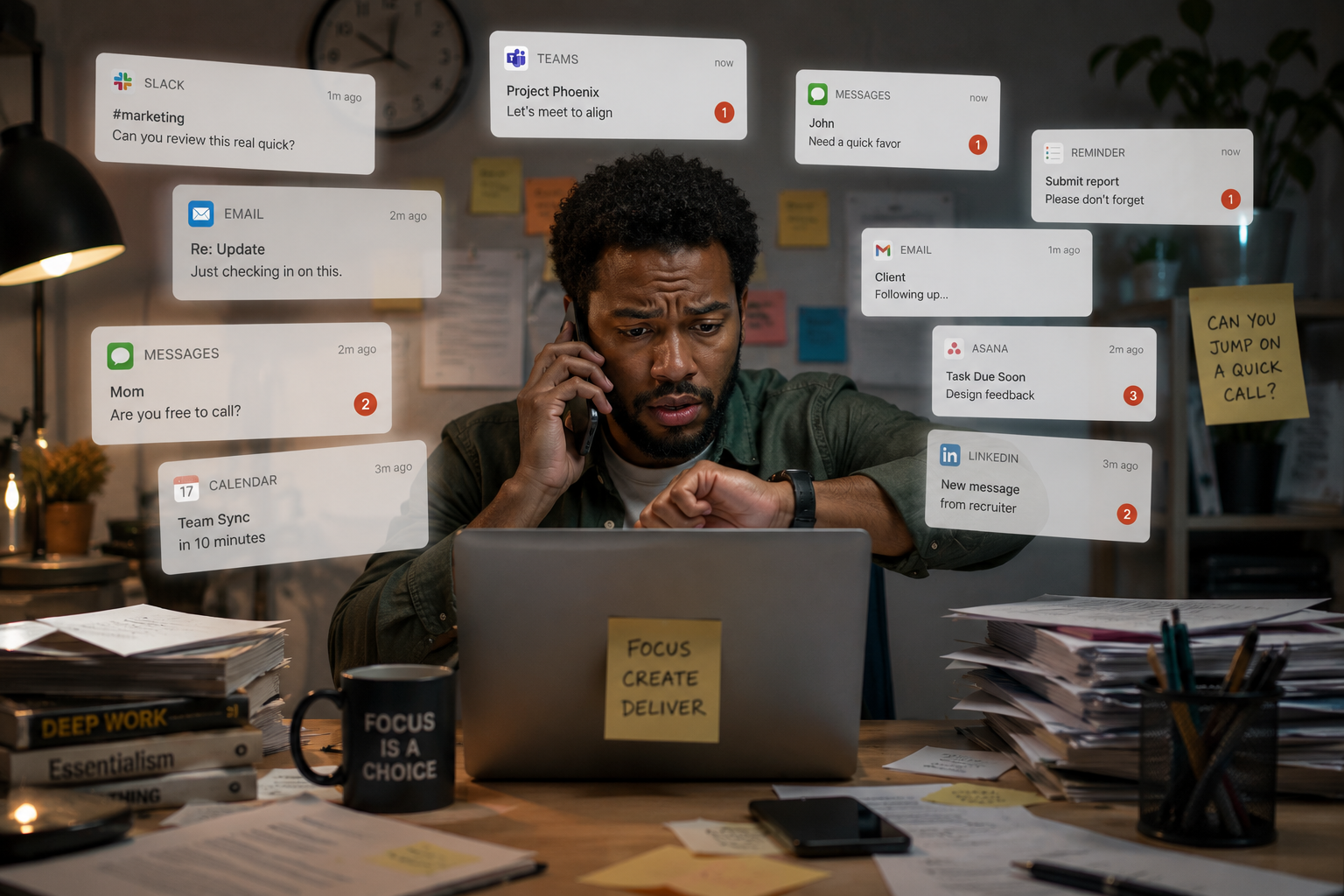
Recently, I watched a situation where several capable people were working toward the same goal. Everyone had good intentions. Everyone wanted the work to move forward.
Yet the day became more complicated than it needed to be.
Instructions came through different conversations.
Priorities shifted throughout the day.
Updates lived in separate places.
No one was trying to create confusion.
But because everyone had a slightly different picture of the work, the work itself became harder.
That experience made me realize something.
"Trust isn't built only through relationships.
Operational trust grows when people share the same reality."
Relationships matter.
When everyone can see the same work, understand its current state, and know who owns the next step, trust doesn't have to rely on assumptions.
It becomes part of the system.
I've started thinking about that shared reality through five conditions.
The Five Conditions of Operational Trust
01Visibility
Can the people who need to see the work actually see it?
When important information only exists in someone's head, or in private conversations, everyone else is forced to guess.
02Ownership
Is it clear who owns the next step?
Shared responsibility sounds collaborative until no one knows who is responsible for moving the work forward.
Clarity creates confidence.
03Transparency
Can someone understand the current status without chasing updates?
The goal isn't constant reporting.
The goal is reducing unnecessary uncertainty.
04Predictability
Does everyone understand what happens next?
Healthy systems reduce friction because people know how work moves from request to completion.
Consistency builds confidence.
05Completion
Is there a visible end to the work?
Work that quietly disappears creates doubt.
Work that visibly closes creates trust.
As I reflected on these ideas, I realized this isn't just about project management.
It's about creating the conditions where people can do their best work.
When visibility is low, people spend energy asking questions that the system should already answer.
When ownership is unclear, priorities compete instead of align.
When transparency is missing, assumptions fill the gaps.
And when assumptions become normal, trust slowly erodes.
Ironically, many organizations try to solve this by asking people to communicate more.
Sometimes that's the answer.
But sometimes the better question is:
Key Insight
What would make communication less necessary because the work itself is already visible?
I've been thinking a lot lately about growth, both in people and in organizations.
In nature, healthy plants don't grow because someone pulls harder on the leaves.
They grow because the conditions are right.
Good soil.
Consistent water.
Adequate light.
Time.
Organizations aren't all that different.
If we want better collaboration, stronger teams, and healthier cultures, we shouldn't only ask whether people trust one another.
We should also ask whether we've designed systems that make trust easier.
Because trust isn't only something we build between people.
Sometimes it's something we build into the way we work.